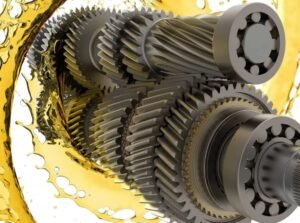
How to chose Industrial Gear Oil in Nigeria : Maintenance for Factory & Plant Machinery
How to chosse Industrial Gear Oil in Nigeria : Maintenance for Factory & Plant Machinery Get In Touch In the relentless environment of Nigerian industry—from
In the dynamic and demanding landscape of Nigerian industry—spanning robust sectors like construction, agriculture, manufacturing, mining, and power generation—hydraulic systems serve as the fundamental muscle behind operational productivity. These intricate networks of pumps, valves, cylinders, and motors convert mechanical power into fluid power, enabling the immense force required to lift, push, mold, and excavate. At the absolute core of this power transmission lies hydraulic oil, a far more sophisticated substance than mere lubricant. It is the essential medium that transmits power, lubricates moving parts, protects against wear and corrosion, seals clearances, and dissipates damaging heat.
The consequences of selecting the wrong hydraulic fluid in Nigeria’s challenging operating environments are severe and financially debilitating. System inefficiencies, accelerated component wear, unexpected downtime, and catastrophic failure are not mere possibilities but probable outcomes with substandard products. For procurement officers, plant engineers, maintenance managers, and equipment owners, the task of sourcing quality hydraulic oil transcends simple purchasing—it is a critical strategic function that directly impacts operational continuity, maintenance budgets, and overall profitability. This exhaustive guide expands into a 2000-word, detailed framework, providing a meticulous checklist and strategic insights to navigate the Nigerian market with confidence, ensuring the integrity and longevity of your vital hydraulic assets.
To source effectively, one must first understand the “what” and “why” behind hydraulic oil performance. Modern hydraulic fluids are engineered chemical solutions with precise additive packages tailored to specific operational demands.
Critical Performance Properties in Detail:
Viscosity & Viscosity Index (VI): This is the single most important property. Viscosity is the oil’s resistance to flow. An oil that is too thin (low viscosity) at operating temperature fails to maintain a protective lubricating film, leading to metal-on-metal contact. An oil that is too thick (high viscosity) causes excessive fluid friction, energy loss, overheating, and sluggish system response. The Viscosity Index (VI) measures how much the viscosity changes with temperature. Nigeria’s climate—from the humid heat of Lagos to the hotter, drier conditions in the North—demands a high VI oil. A high VI fluid, such as many premium hydraulic system lubricants, experiences less viscosity change, ensuring reliable performance during cold morning starts and under peak afternoon operating temperatures. This property is paramount for equipment protection across seasons.
Additive Technology: The base oil is just the carrier. The additive package defines performance.
Anti-Wear (AW) Agents: Typically zinc dialkyldithiophosphate (ZDDP) or ashless alternatives, these form a protective sacrificial layer on metal surfaces, preventing scuffing and wear under high pressure. This is non-negotiable for modern, high-pressure vane and piston pumps.
Oxidation Inhibitors: Hydraulic oil oxidizes when exposed to heat, air, and metal catalysts, forming sludge, varnish, and acidic byproducts. Premium oils contain robust antioxidant packages that significantly extend fluid life and maintain system cleanliness.
Rust and Corrosion Inhibitors: Protect ferrous and non-ferrous components from attack by water and acidic contaminants—a crucial consideration in Nigeria’s humid environment.
Demulsifiers: Enable water to separate quickly and settle out, allowing for easy drainage. Water in oil promotes corrosion, reduces lubricity, and can cause cavitation.
Anti-Foam Agents: Prevent the formation of stable foam, which can lead to poor system response, pump cavitation, and reduced heat transfer.
OEM Specifications: The Non-Negotiable Blueprint: Manufacturers like Caterpillar, Bosch Rexroth, Parker, Denison, and Eaton invest millions in testing to determine the exact fluid their components need. Their specifications (e.g., Denison HF-6, Eaton 35VQ25, Caterpillar TO-4) are not suggestions; they are engineering requirements. Using a fluid that does not carry the necessary OEM approval voids warranties and dramatically increases the risk of premature failure.
Action: Conduct a full asset audit. Create a database listing every hydraulic machine, its OEM, model, and the specific fluid specification from its manual (ISO VG Grade and OEM approval code).
Deep Detail: Note the operating environment: Is it a dusty quarry, a humid coastal port, or an air-conditioned factory floor? Document average and peak operating temperatures. This data is essential for selecting the correct viscosity grade and additive package.
Action: Research and shortlist potential suppliers.
Deep Detail:
Brand Authority: Investigate the brand’s global reputation, history of R&D investment, and commitment to the African market. A brand with a dedicated technical team in West Africa is a significant advantage.
Distributor Verification: Is the distributor truly authorized? Request and verify their certificate of authorization. Visit their warehouse. A reputable distributor, such as an authorized partner for R8 Drive Lubricants, will have clean, organized storage, proper drum handling equipment, and technical data readily available. They are a frontline defense against the pervasive threat of counterfeit lubricants.
Technical Support Capability: Can the supplier provide more than just a product? Ask if they offer oil analysis programs, contamination control audits, or training workshops. This level of technical service transforms a vendor into a strategic partner for machinery longevity.
Action: Scrutinize the product before purchase.
Deep Detail:
Documentation: Insist on the latest Technical Data Sheet (TDS) and Safety Data Sheet (SDS). The TDS must clearly list the ISO VG, VI, and all OEM approvals claimed. Cross-check these against your manual.
Independent Testing (For Critical Applications or Large Volumes): For major contracts or critical machinery, invest in third-party laboratory analysis of a pre-supply sample. Tests should confirm viscosity, VI, elemental additive levels, and cleanliness codes. This verifies product authenticity and formulation integrity beyond the paperwork.
Action: Build a TCO model to compare options.
Deep Detail: Move beyond price-per-liter. A premium fluid like an advanced high-performance hydraulic oil may cost 30% more upfront but can deliver 200% or more in extended drain intervals, 5-10% in energy savings from reduced friction, and a drastic reduction in component replacement costs and unplanned downtime. Calculate the cost of one hour of downtime for your key equipment—this figure alone often justifies the investment in superior reliable hydraulic oil.
Action: Secure the supply chain from the supplier’s tank to your machine’s reservoir.
Deep Detail:
Packaging: Ensure drums are new, sealed, undamaged, and clearly labeled with batch numbers and manufacture dates.
Cleanliness: Discuss the supplier’s transfer practices. Do they use sealed, dedicated pumps and hoses? Contamination (dust, water, other fluids) introduced during delivery is a leading cause of failure.
On-Site Practices: Plan for clean storage (indoors, on racks), dedicated, labeled transfer equipment, and the use of filter carts when filling reservoirs.
To crystallize the decision-making process, here is a comparative analysis of sourcing approaches:
| Aspect | Low-Cost / Generic Oil Approach | Branded, Standard Hydraulic Oil | Premium / OEM-Approved & Technical Partnership (e.g., R8 Drive Lubricants) |
|---|---|---|---|
| Primary Focus | Upfront Purchase Price | Brand Reliability & Basic Spec Match | Total Cost of Ownership & System Optimization |
| Quality Assurance | Minimal; high risk of counterfeit or sub-spec blends. | Reliant on brand’s QA; requires verification of authorized source. | Stringent; supported by OEM approvals, batch documentation, and optional independent testing. |
| Technical Support | None or very limited. | Basic product selection guidance. | Comprehensive: Includes oil analysis, contamination control planning, troubleshooting, and maintenance training. |
| Product Performance | Meets basic viscosity grade; unstable additive package; prone to rapid oxidation and thermal breakdown. | Consistent quality; meets stated ISO grade and common industrial specs. | Engineered for performance: High VI, superior thermal/oxidative stability, excellent filterability and demulsibility for extended fluid life. |
| Impact on Equipment | High Risk: Accelerated wear, sludge/varnish formation, reduced efficiency, high risk of unscheduled downtime. | Standard: Adequate protection under normal conditions; may fall short in extreme or high-pressure applications. | Optimal Protection: Maximizes component protection, extends drain intervals, protects system cleanliness, and enhances energy efficiency. |
| Long-Term Cost | Highest: Frequent oil changes, high component replacement costs, major expense from unplanned downtime. | Moderate: Predictable maintenance costs, but potential for higher long-term wear. | Lowest: Higher initial fluid cost offset by extended drains, fewer failures, lower energy use, and maximized operational uptime. |
| Best For | Non-critical, low-pressure systems where failure cost is negligible. | General industrial applications with standard pressure ranges and controlled environments. | Critical, high-value, or high-pressure machinery; harsh operating environments; operations prioritizing reliability and profitability. |
Pros and Cons of Different Sourcing Strategies:
Sourcing Based Solely on Price:
Pros: Minimizes immediate cash outlay.
Cons: Exponentially increases long-term operational risk, maintenance costs, and downtime. Highest probability of encountering counterfeit or adulterated products. Offers zero technical support.
Sourcing from a Generic Local Blender:
Pros: May offer faster local delivery and flexible payment terms.
Cons: Inconsistent quality and additive treatment. Often lacks OEM approvals and technical data sheets. Limited R&D, so products may not meet the demands of modern, high-performance systems.
Sourcing from an Authorized Distributor of an International Brand:
Pros: Guaranteed product quality and authenticity. Access to verifiable technical data and OEM approvals. Some level of brand-backed technical support.
Cons: Can be more expensive upfront. Support quality may vary by distributor.
Sourcing Through a Technical Partner (Value-Added Supplier):
Pros: Delivers the highest Total Cost of Ownership savings. Provides proactive industrial fluid solutions, including predictive maintenance through oil analysis. Becomes an extension of your maintenance team, driving operational continuity.
Cons: Requires a higher level of engagement and potentially higher initial product cost. Needs management buy-in to appreciate the long-term value.
The Nigerian market presents unique challenges: currency volatility, complex logistics, and a prevalent counterfeit economy. In this context, the principles of Google’s E-E-A-T (Experience, Expertise, Authoritativeness, Trustworthiness) framework provide an excellent lens for evaluating a supplier, moving beyond just product to evaluating the partner.
Experience: How long has the supplier operated in Nigeria? Do they understand the realities of power fluctuations, dusty sites, and seasonal humidity? A partner like R8 Drive Lubricants, with deep regional experience, can tailor recommendations for local conditions.
Expertise: Do they employ certified lubrication specialists or engineers? Can they interpret an oil analysis report and recommend corrective actions? This expertise is critical for moving from reactive to proactive maintenance.
Authoritativeness: Are they recognized as a leader? This can be demonstrated through OEM endorsements, case studies with major Nigerian firms, or a portfolio of high-specification products designed for demanding applications.
Trustworthiness: Are they transparent with pricing and data? Do they stand behind their products? Will they help you resolve a problem, or disappear after the sale? Trust is the bedrock of a partnership that protects your multi-million Naira assets.
Sourcing quality hydraulic oil in Nigeria is a deliberate, knowledge-driven process that separates market leaders from those struggling with persistent equipment problems. By adhering to the detailed checklist—defining precise requirements, vetting suppliers on E-E-A-T principles, verifying quality, calculating TCO, and enforcing contamination control—you transform a routine purchase into a strategic investment in operational excellence.
The choice is clear: you can pay a lower price upfront for a generic fluid and incur heavy, unpredictable costs later, or you can partner with an authoritative, expert supplier of premium hydraulic fluids and enjoy the predictable, low-TCO operation of protected, efficient machinery. In the competitive drive for productivity and profit, the right hydraulic oil, sourced through the right partner, is not just a consumable—it is a fundamental pillar of sustainable industrial success in Nigeria. Choose the path that secures your uptime, safeguards your capital investment, and fuels your long-term growth.

How to chosse Industrial Gear Oil in Nigeria : Maintenance for Factory & Plant Machinery Get In Touch In the relentless environment of Nigerian industry—from

How to Choose Between Synthetic and Conventional Transmission Oil In Nigeria? Get In Touch In Nigeria, where the vehicle is not merely a mode of
How to Choose the Most Durable Diesel Engine Oil in Nigeria? Get In Touch In Nigeria’s demanding operating environment—from Lagos traffic to northern desert routes—diesel

Sourcing Quality Hydraulic Oil in Nigeria: A Buyer’s Checklist Get In Touch In the dynamic and demanding landscape of Nigerian industry—spanning robust sectors like construction,

Solve This: Top Signs Your Car Needs a Fuel Injector Cleaner in Nigeria Get In Touch In Nigeria’s demanding driving conditions—from Lagos traffic jams to

Group III Base Oil Suppliers Nigeria | High Viscosity Index Base Stocks Get In Touch The Nigerian industrial and automotive landscape is undergoing a silent

Group II Base Oil in Nigeria: A Guide to Specifications, Benefits & Application Get In Touch In the heart of Nigeria’s dynamic industrial and automotive

What is Exactly Lithium Grease in Nigeria and Why Does Every Driver Need It? Get In Touch If you’re a driver in Nigeria, you’re no

How to Choose the Perfect CNG Engine Oil in Nigeria for Your Car Get In Touch As fuel prices continue to be a significant concern

Guide to Choosing The Perfect Grease in Nigeria For Your Vehicle’s Specific Needs Get In Touch Your vehicle is a complex symphony of moving parts,